

Germany is one of the most popular holiday destinations in Europe. There are a huge number of attractions and experiences which can appeal to many different types of traveller and trip.
Whether you are interested in medieval towns, World War II history or simply a city break in a cosmopolitan city, Germany has it all. From the world-famous to hidden gems, here at Travel without Borders, we help you discover the best Germany has to offer.
Check out our guide on where to go on holiday in Germany for some inspiration.
Berlin
Berlin is one of Europe’s great capital cities, with a rich political history combined with a fascinating contemporary cultural scene. It provides a combination of glamour and grit that is bound to mesmerise those keen to explore its vibrant culture, cutting-edge architecture, fabulous food and tangible history.
Berlin is a huge city, with around 3.9 million inhabitants, so it doesn’t really lend itself to being treated as a quick day-trip destination. Because the city was divided for so long, its different districts developed their own centres and identities, and travelling between attractions can take longer than first-time visitors expect.
If iconic sights are what you look for in a trip, then a holiday to Berlin is perfect. There are numerous world-famous sights to see, with some of the best-known examples being the Brandenburg Gate, the Reichstag and the remains and memorials of the Berlin Wall.
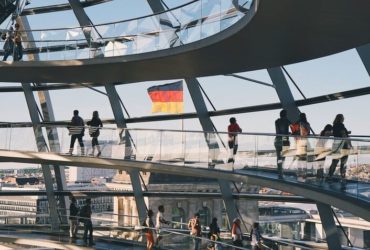
The Brandenburg Gate remains one of Germany’s most recognisable landmarks, while the Reichstag is home to the German Bundestag and its impressive modern glass dome.
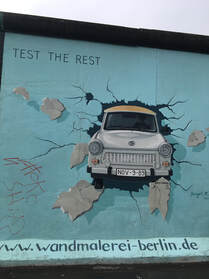
The surviving sections and memorials of the Berlin Wall tell very different parts of the city’s history. At the East Side Gallery, a long surviving section of the Wall became an international open-air gallery, with murals created by artists from around the world following German reunification.
Rothenburg ob der Tauber
With its splendid location and charming medieval atmosphere, hardly any other town is able to captivate its visitors in quite the same way as Rothenburg ob der Tauber in Bavaria – a true medieval gem. A walk through this small town is an unforgettable encounter with bygone centuries.
The imposing Town Hall, stately towers, massive fortifications, churches and patrician houses are witnesses to the town’s important past as a Free Imperial City.
With its web of cobbled lanes, half-timbered houses and extensive town walls, Rothenburg has become one of Germany’s best-known medieval destinations.
Rothenburg ob der Tauber is also one of the best-known stops on Germany’s Romantic Road. Today, the route stretches for around 460 kilometres and links 29 towns between Würzburg and Füssen, combining medieval towns, historic landscapes, churches and castles.
Berchtesgadener Land
Berchtesgadener Land in Bavaria is a region of spectacular natural beauty, combining majestic mountains, crystal-clear lakes and the landscapes of Berchtesgaden National Park.
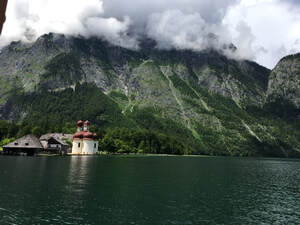
The region boasts stunning scenery alongside some fascinating attractions. These include the historic Berchtesgaden Salt Mine, which has been in operation for more than 500 years, Lake Königssee and the pilgrimage church of St. Bartholomä.
High above Berchtesgaden stands the Kehlsteinhaus, better known in English as the Eagle’s Nest. Today it combines spectacular Alpine views with an important historical story. Its history is inseparably linked with the nearby Obersalzberg, which became one of the most important centres of power of the Nazi regime outside Berlin. Visitors interested in this period should also consider the Obersalzberg Documentation Centre.
Regensburg
Another essential historic German city is Regensburg. Its beautifully preserved medieval centre developed over centuries as an important trading and political centre on the Danube.
Regensburg now holds two UNESCO World Heritage titles. The Old Town with Stadtamhof was inscribed in 2006, while the Roman Danube Limes became part of a transnational UNESCO World Heritage Site in 2021.
In the days of the Holy Roman Empire, Regensburg was an important political centre and later hosted the Perpetual Imperial Diet. Visitors can still explore this story in the historic Old Town Hall and Imperial Hall.
The city is also rich in churches, historic houses and medieval architecture. One of its great landmarks is St Peter’s Cathedral, an outstanding example of Gothic architecture in southern Germany.
Despite the weight of its history, Regensburg has a relaxed atmosphere, with lively squares, traditional restaurants, beer gardens and a thriving contemporary city life.
Munich
The capital of Bavaria and home to the world-famous football club FC Bayern München, Munich provides a compelling mix of history, culture and modern city life.
Traditional and modern sit side by side here particularly well. Historic churches, royal palaces and beer halls coexist with contemporary architecture, major companies and world-class museums.
The city has an outstanding range of museums and galleries, including the three Pinakothek museums. Car enthusiasts can also visit BMW Welt and the BMW Museum, reflecting the close association between Munich and BMW.
Munich is, of course, the home of the original Oktoberfest, one of the world’s largest and best-known folk festivals. Other German cities and regions have their own major beer and folk festivals, but Munich’s Oktoberfest remains unique in scale and tradition.
With Bavaria offering so many sights, Munich can also make a useful base or starting point for exploring more of the region, including King Ludwig II’s famous palaces and castles such as Neuschwanstein.
Mosel Valley
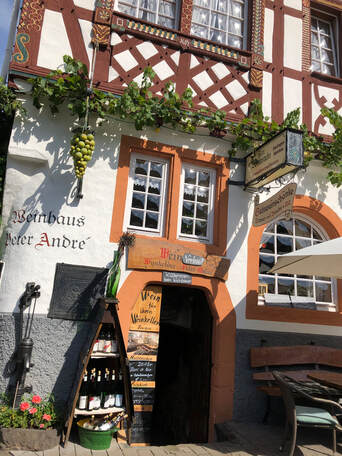
The Mosel Valley offers travellers a more intimate alternative to the Rhine. The river winds between steep, vine-covered slopes, historic villages and small towns, creating one of Germany’s most distinctive landscapes.
Along the river you will find hilltop castles, colourful half-timbered villages, historic wine estates and traditional wine taverns.
The region is particularly famous for its wine, especially Riesling, which thrives on many of the Mosel’s steep slate slopes.
At the western end of the German Mosel lies Trier, officially recognised as Germany’s oldest city. Founded by the Romans in 17 BC, Trier developed into one of the most important cities of the Roman Empire north of the Alps.
Today its extraordinary collection of Roman and later historic monuments includes the Porta Nigra, Roman baths, the Roman Bridge, Trier Cathedral and the Church of Our Lady, several of which form part of the city’s UNESCO World Heritage listing.
Lake Constance
Lake Constance provides the setting for a wonderfully varied holiday. The lake itself lies between Germany, Austria and Switzerland, while the wider tourism region also incorporates nearby Liechtenstein, creating what is often promoted today as a four-country destination.
Its location beneath the Alps means visitors can combine lakeside towns, boat trips, cycling, gardens and historic attractions with excursions into neighbouring countries.
Lindau, on the German shore, is particularly memorable. Its historic old town sits on an island, with its famous harbour entrance framed by the Bavarian lion and lighthouse. The waterfront offers impressive views across the lake towards the Austrian and Swiss Alps.
Other highlights around the lake include Constance, Mainau Island, Meersburg and the prehistoric pile dwellings at Unteruhldingen.
Dresden
Dresden is a beautiful city that combines an extraordinary cultural heritage with the story of destruction and reconstruction.
Before the Second World War, Dresden was renowned for its magnificent Baroque architecture and art collections. Much of the historic centre was destroyed during the bombing of February 1945, but many important buildings have since been painstakingly restored or reconstructed.
One of the most famous is the Frauenkirche. The church collapsed following the bombing in 1945 and its ruins remained in the centre of Dresden for decades as a memorial. Reconstruction began in 1993 and was completed in 2005, with original stones incorporated wherever possible.
Today, the Frauenkirche once again dominates the historic city skyline and visitors can also climb to its viewing platform.
Dresden also makes a useful starting point for exploring the surrounding region. Saxon Switzerland National Park, with its dramatic sandstone formations and walking landscapes along the Elbe, can be combined with a stay in the city.
Erfurt
Erfurt expanded during the Middle Ages to become an important centre of trade and learning. It was here that Martin Luther studied at university and later entered the Augustinian monastery, making the city an important part of the story of the Reformation.
Today, Erfurt is the capital and largest city of Thuringia and combines a remarkably well-preserved historic centre with the life of a modern regional capital.
Its architectural highlights include Erfurt Cathedral, the Church of St Severus and the impressive Petersberg Citadel, one of the largest and best-preserved Baroque city fortresses in Central Europe.
Erfurt also gained an important new international distinction in 2023, when its medieval Jewish heritage – the Old Synagogue, Mikveh and Stone House – was inscribed on the UNESCO World Heritage List.
The Old Synagogue is one of Europe’s most important surviving medieval Jewish buildings and forms part of a much broader story of Jewish life in medieval Erfurt.
Harz Mountains
The Harz Mountains are a wonderful choice if you’re active, interested in historic towns or simply enjoy dramatic landscapes.
The region offers extensive opportunities for walking and hiking, with the Brocken – the highest mountain in northern Germany – one of its most famous landmarks. Other natural highlights include the Bodetal valley, caves, reservoirs and forests.
There is also plenty to discover away from the walking trails. The Harz contains historic towns, castles, monasteries, UNESCO World Heritage sites and a strong tradition of legends and folklore.
One of the region’s great attractions is the Harz Narrow Gauge Railways. The network still operates an impressive fleet that includes 25 steam locomotives, and steam-hauled trains continue to climb to the summit of the Brocken.
From Drei Annen Hohne, the Brocken Railway climbs to the summit in around 50 minutes, offering one of Germany’s most distinctive historic railway experiences.
Wernigerode is another highlight of the region, with a colourful historic centre, an elaborate timber-framed Town Hall and its castle overlooking the town.
Travel Without Borders Bespoke Holiday Planning
Travel Without Borders are big believers in giving travellers the freedom to design and experience their own unique holiday. Germany is the perfect destination for this, with an extraordinary range of historic cities, landscapes, regional traditions and places to stay.
Travel without Borders provides bespoke holiday planning for independent travellers who want to explore Germany in a more personal way. We can help you shape a carefully considered itinerary around the places, experiences and interests that matter most to you, while you book and pay the relevant travel suppliers directly.
If you would like assistance in designing your German trip, please get in touch.